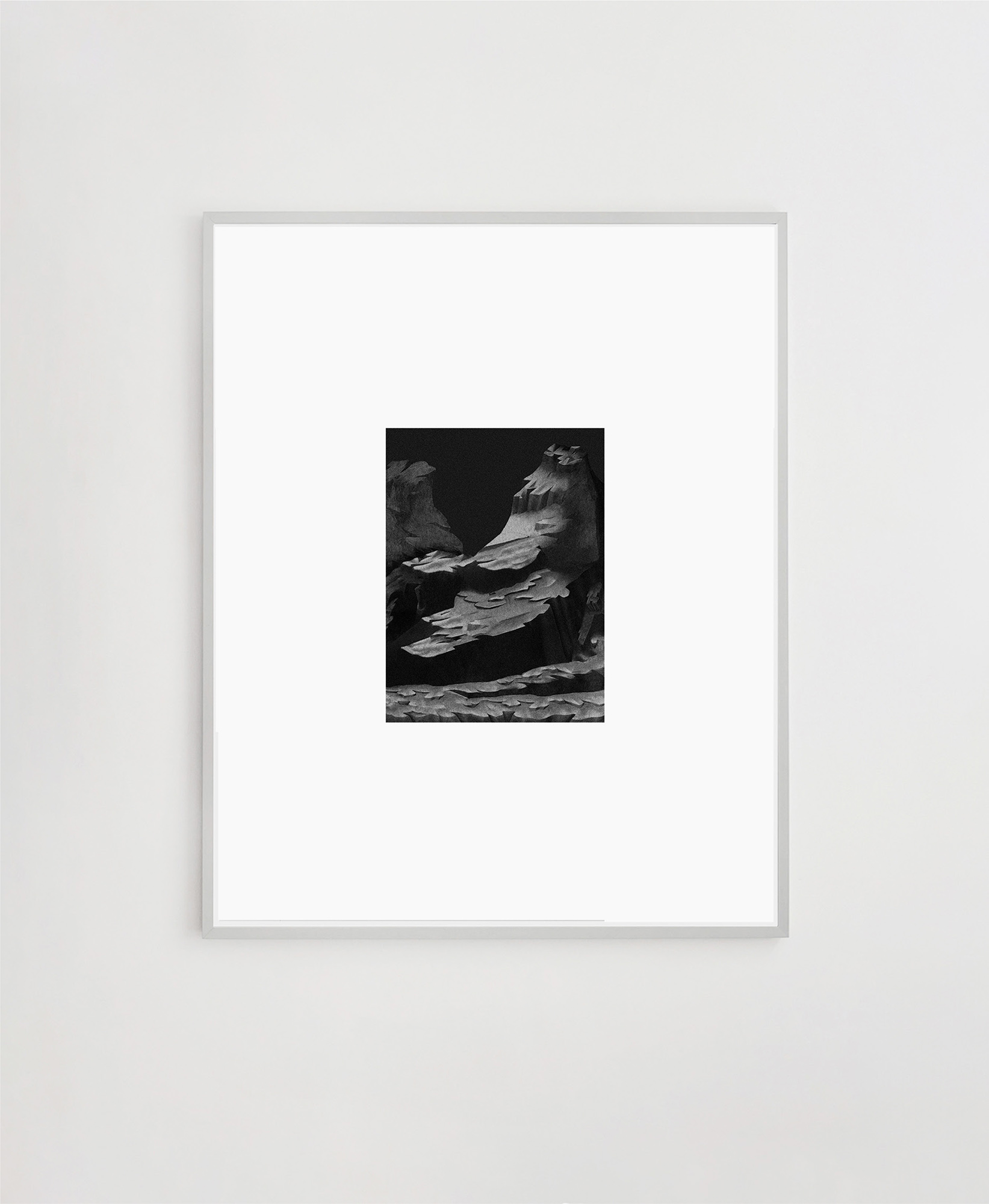
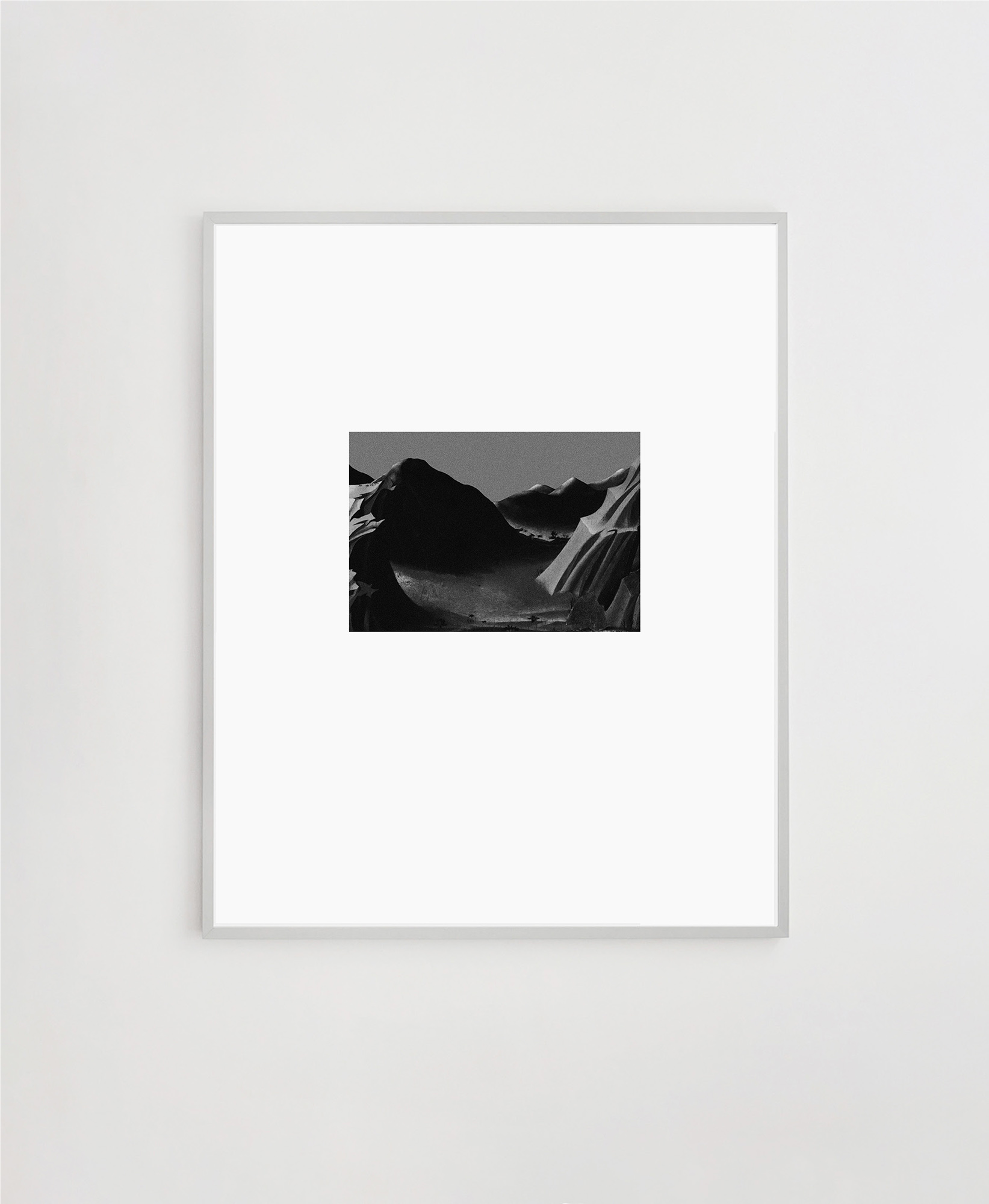
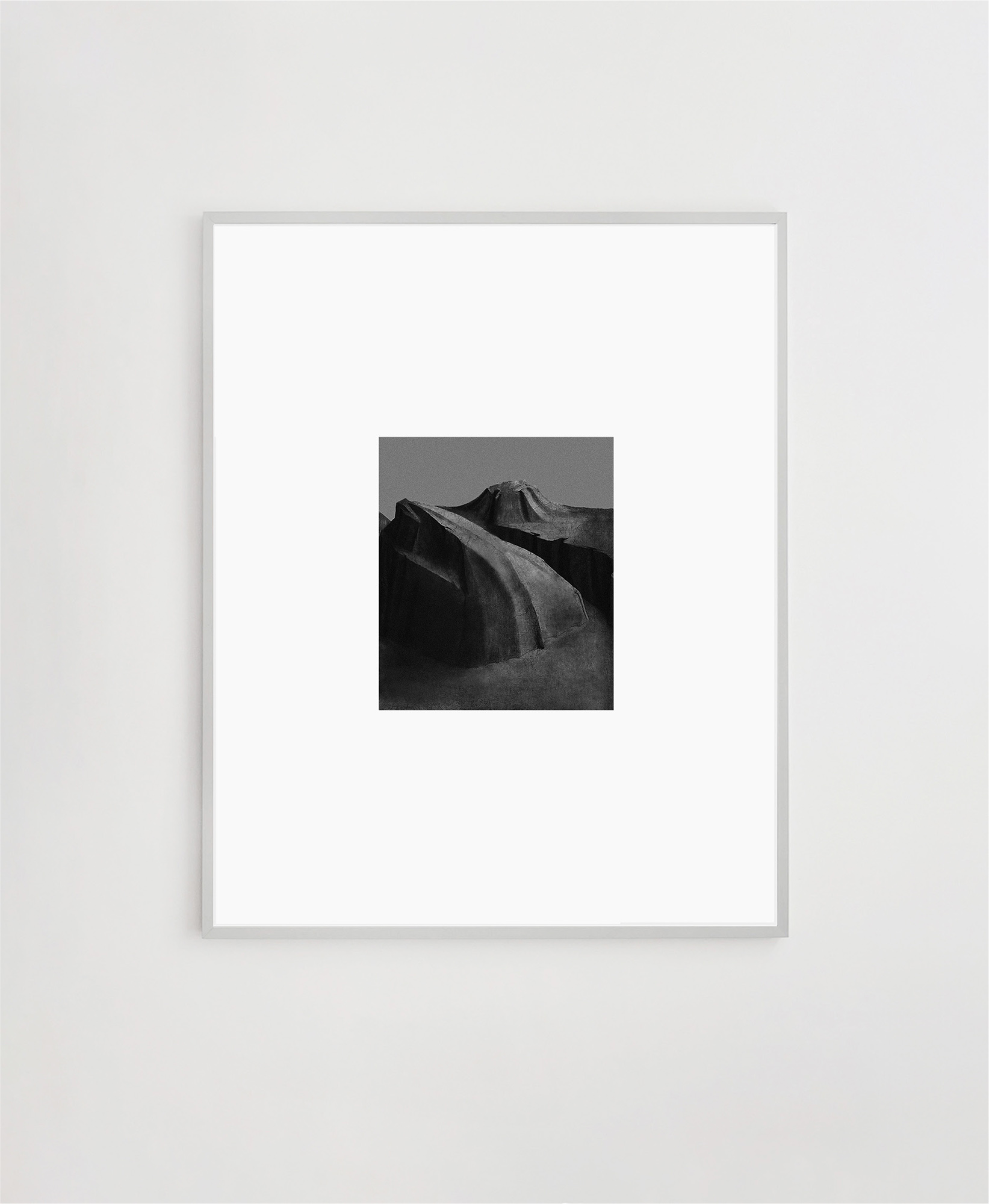
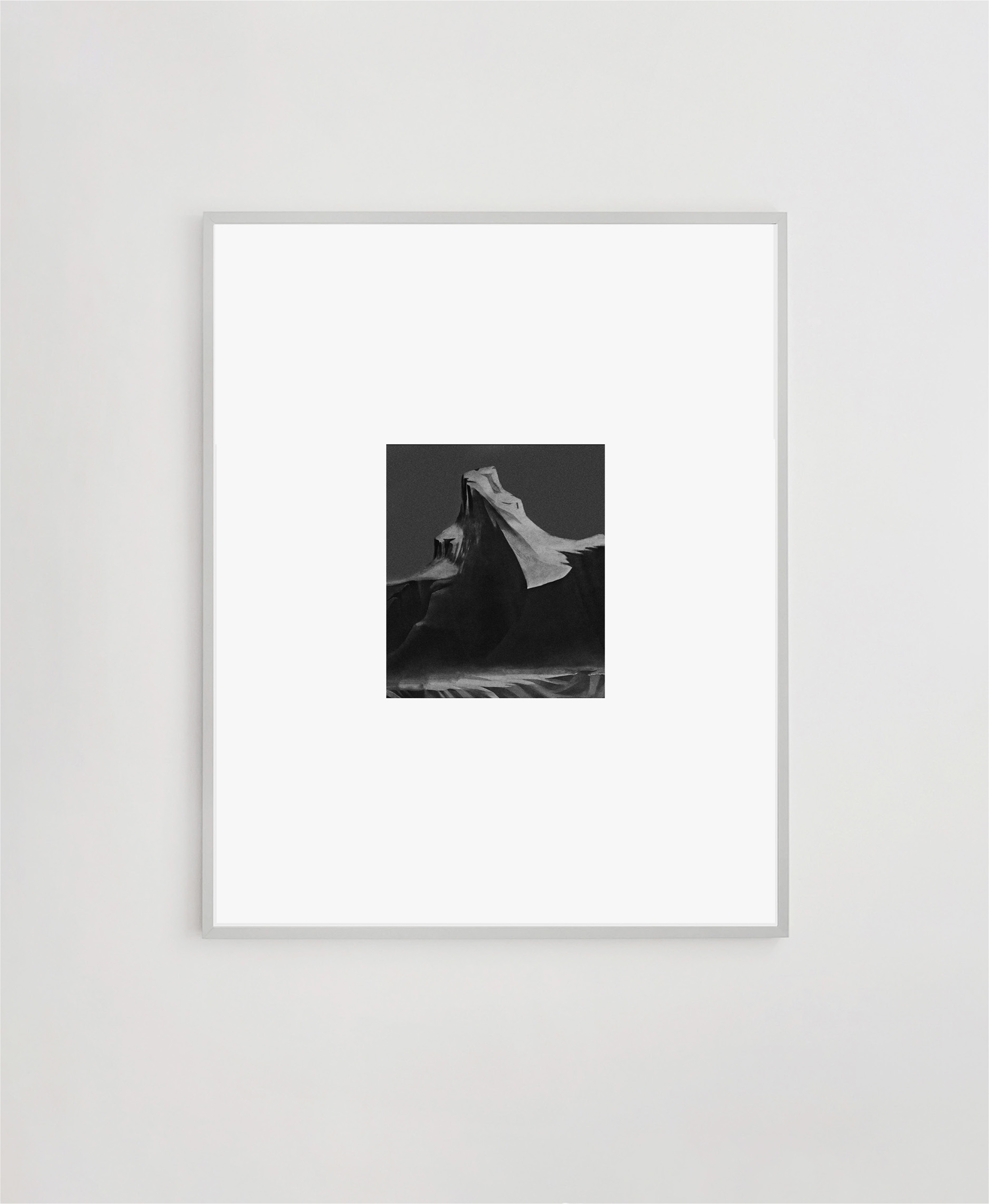
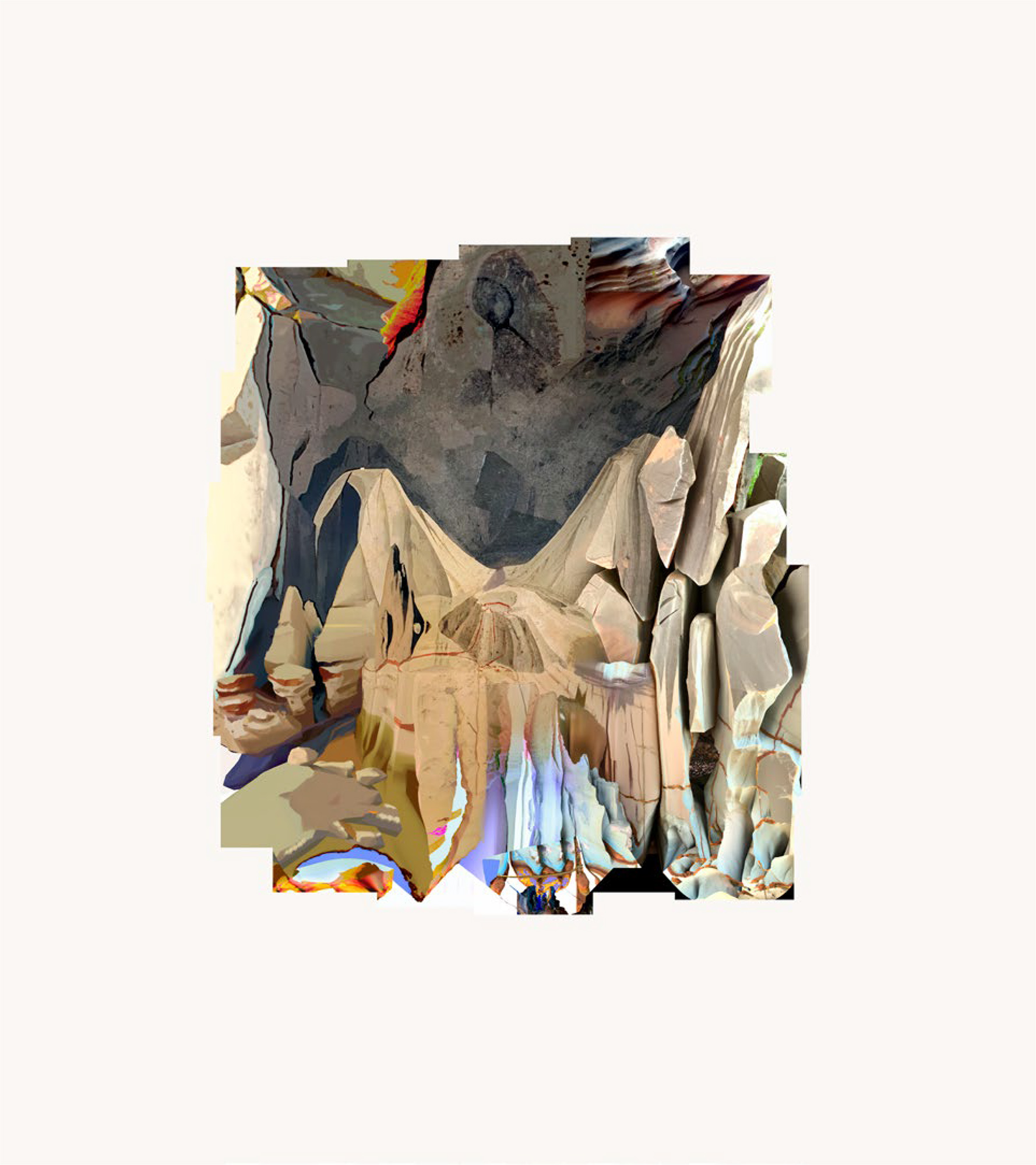
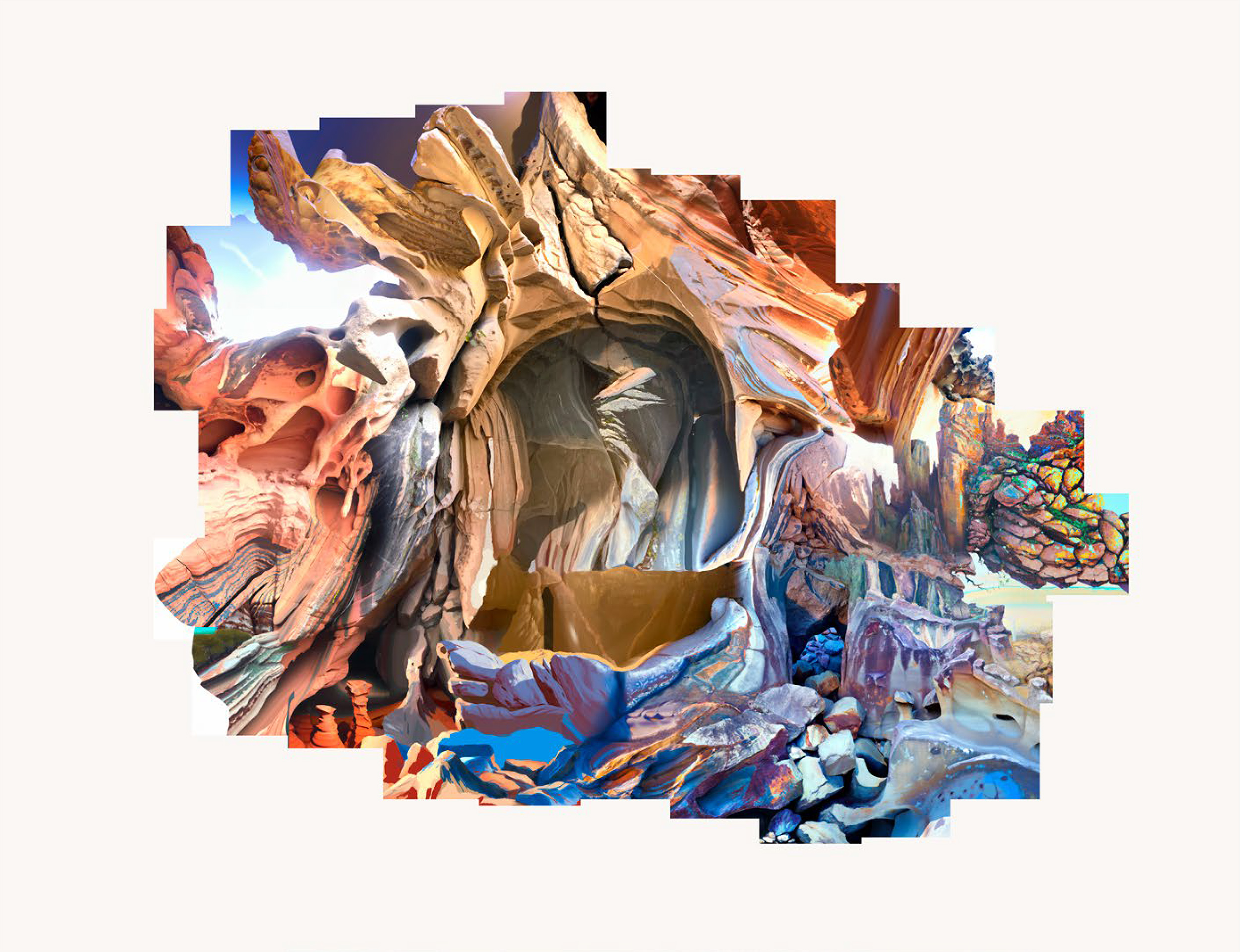
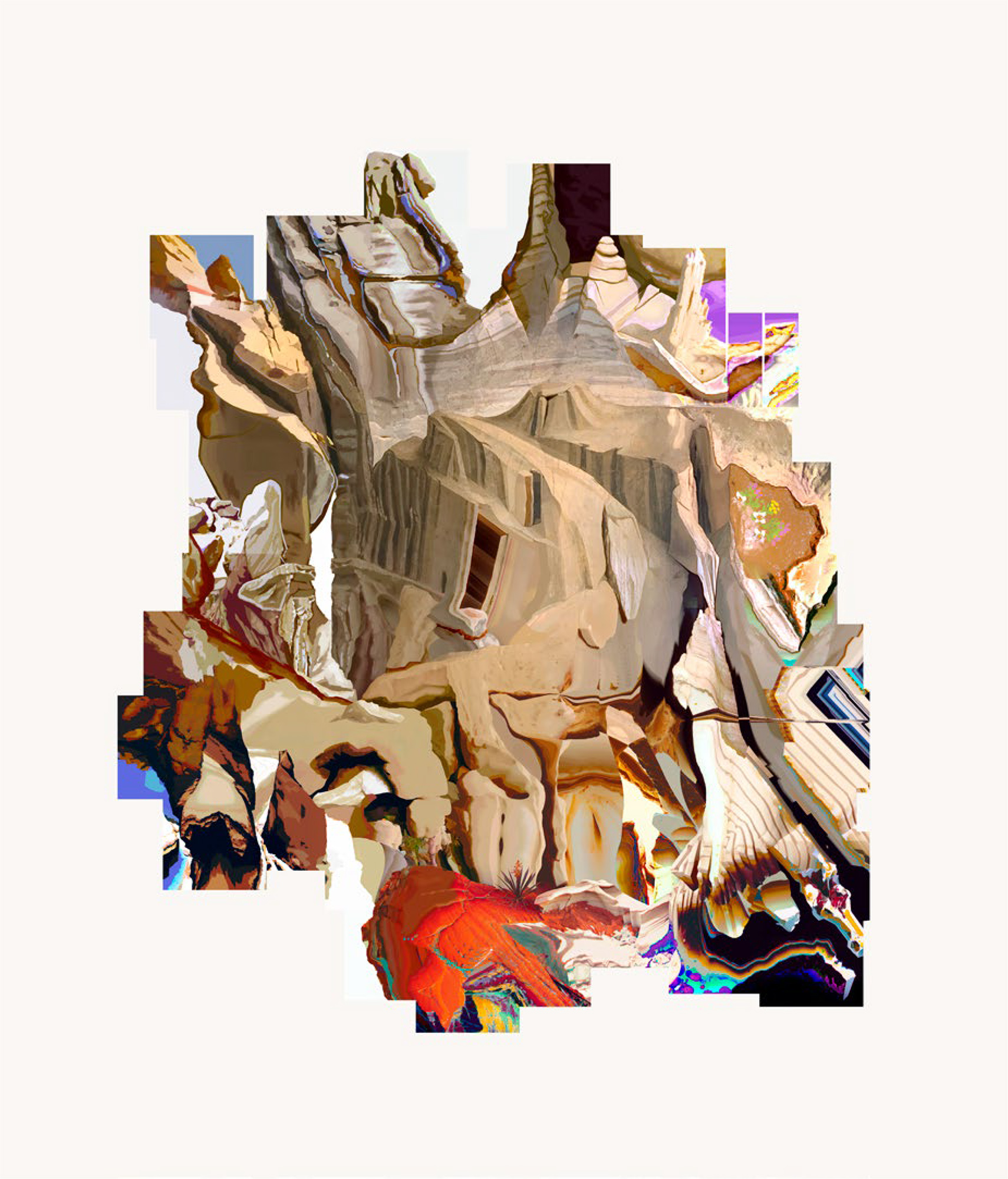
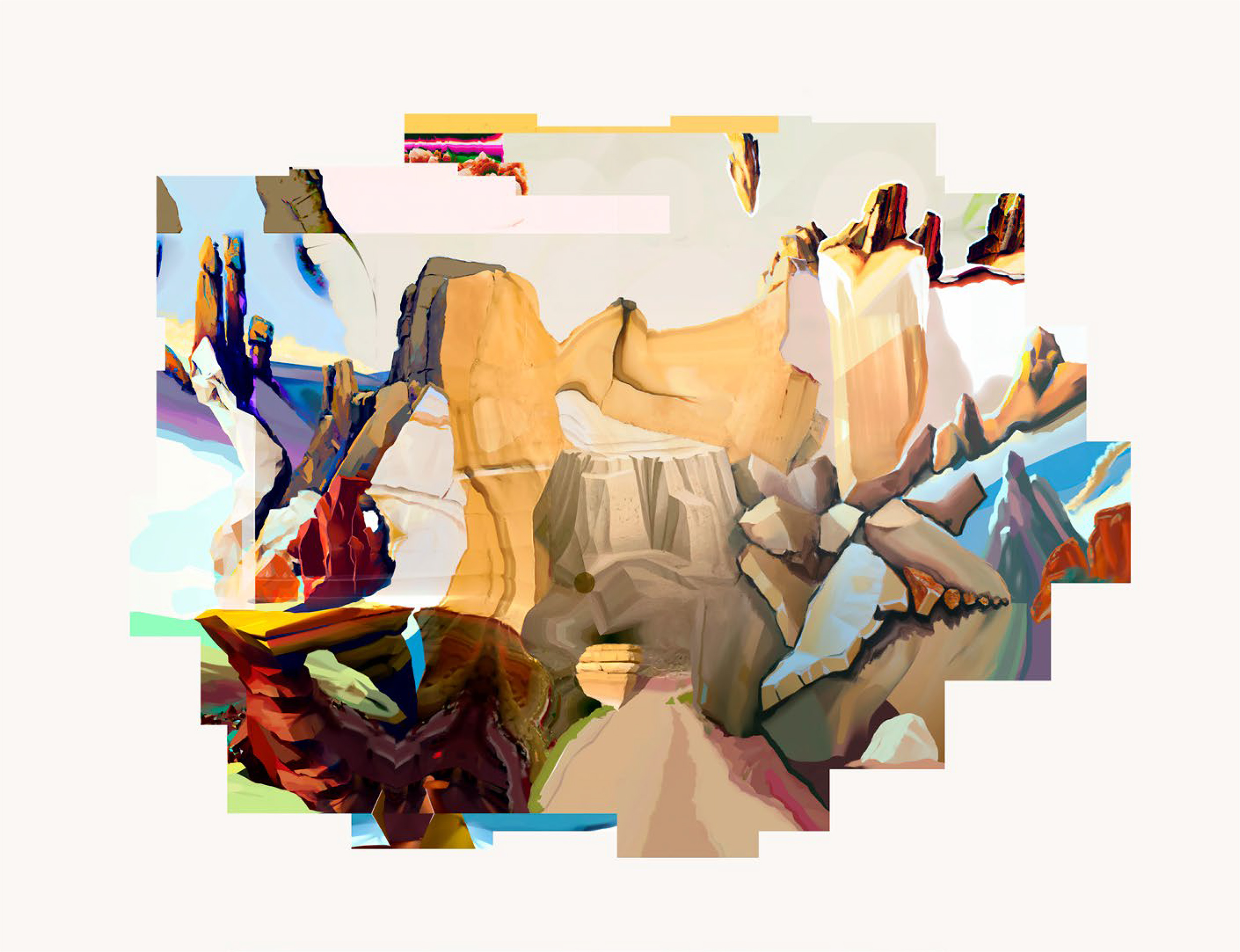
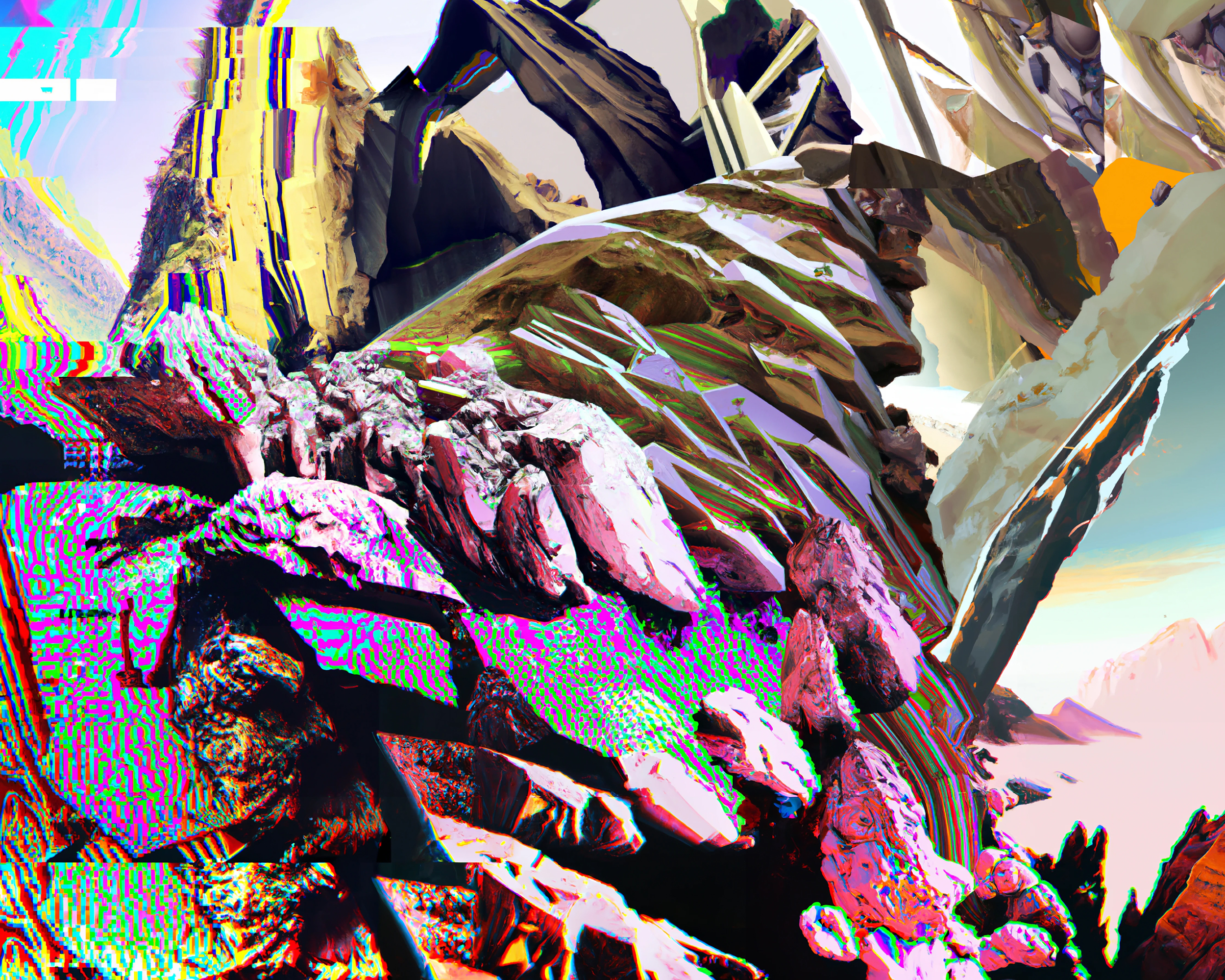
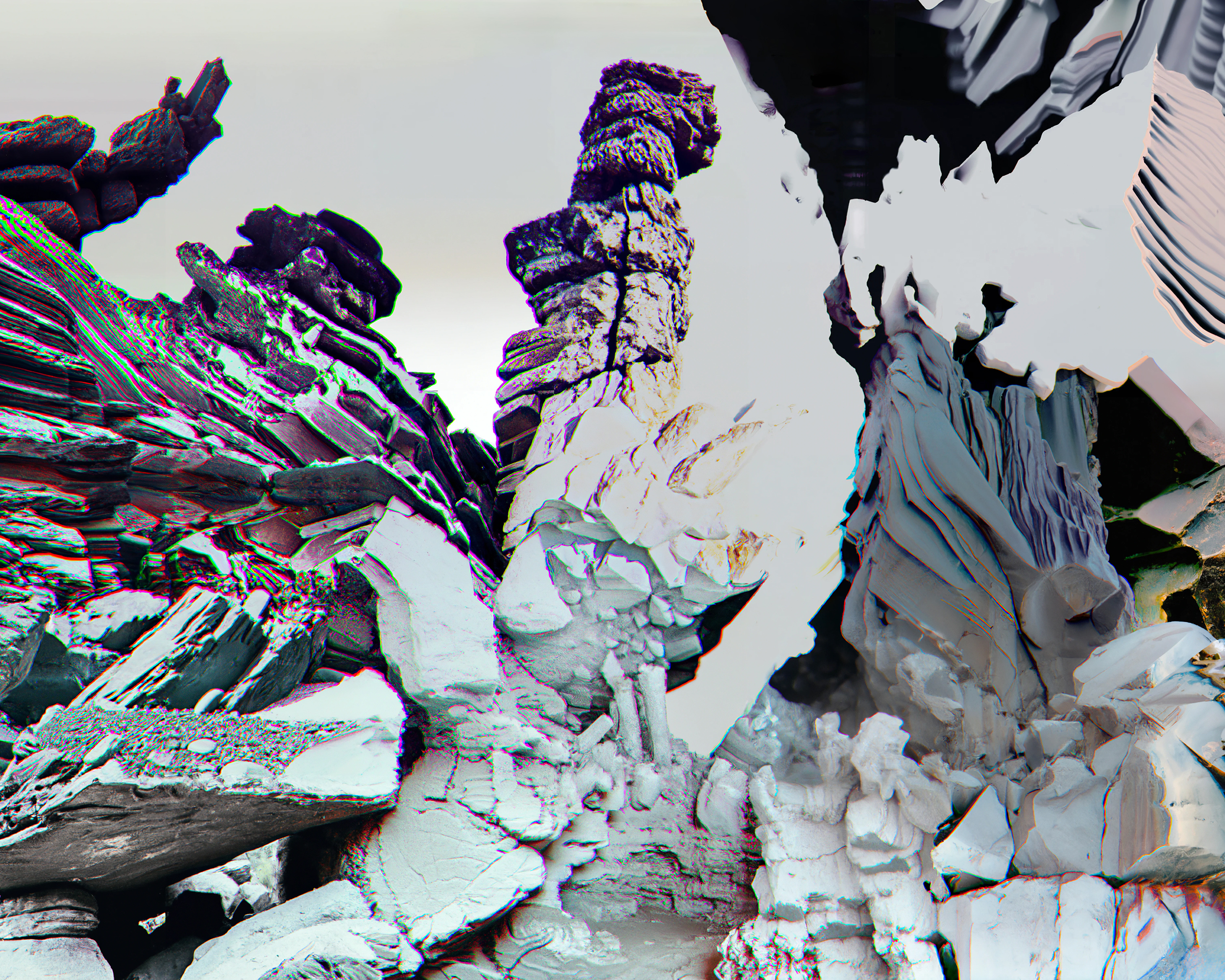
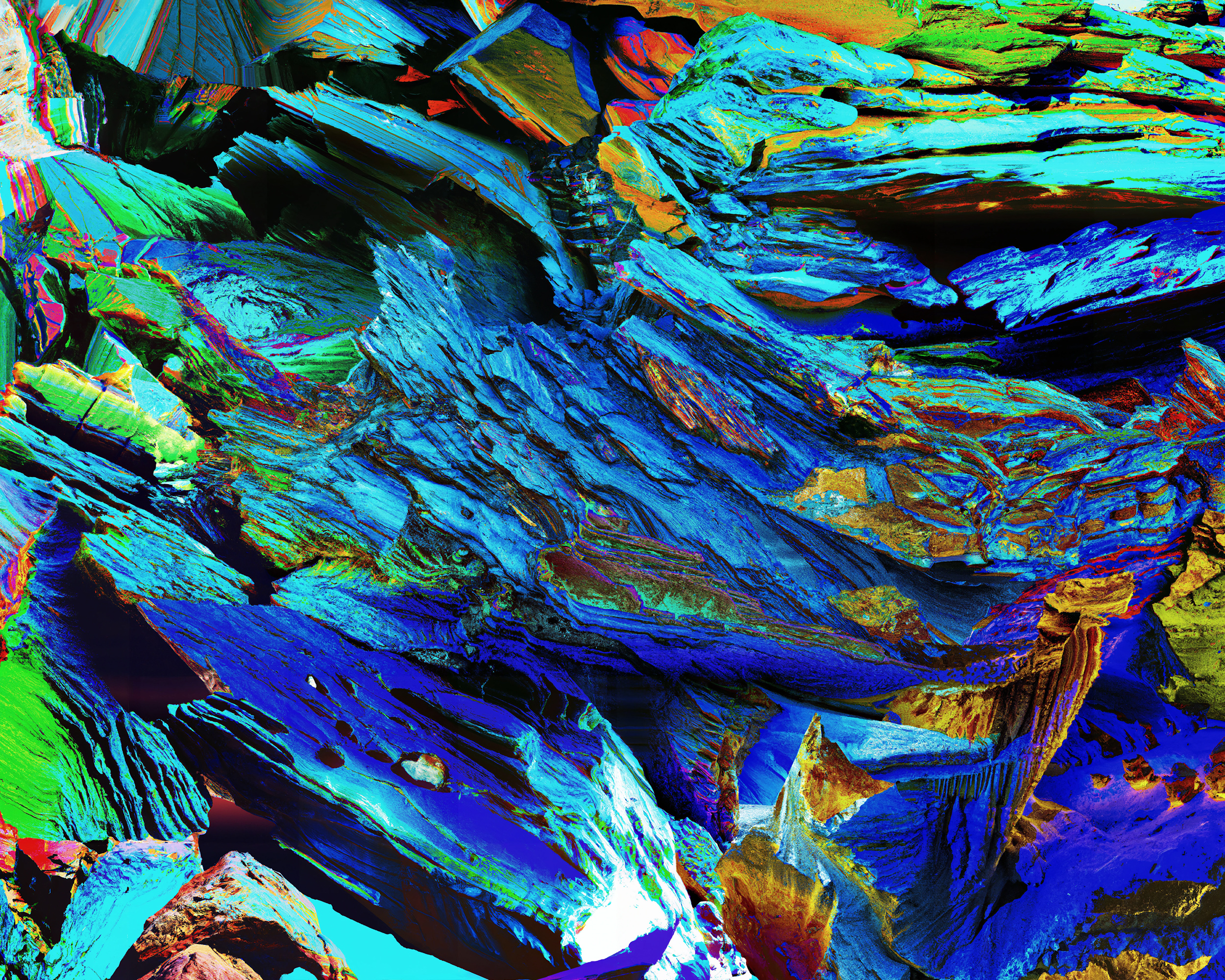
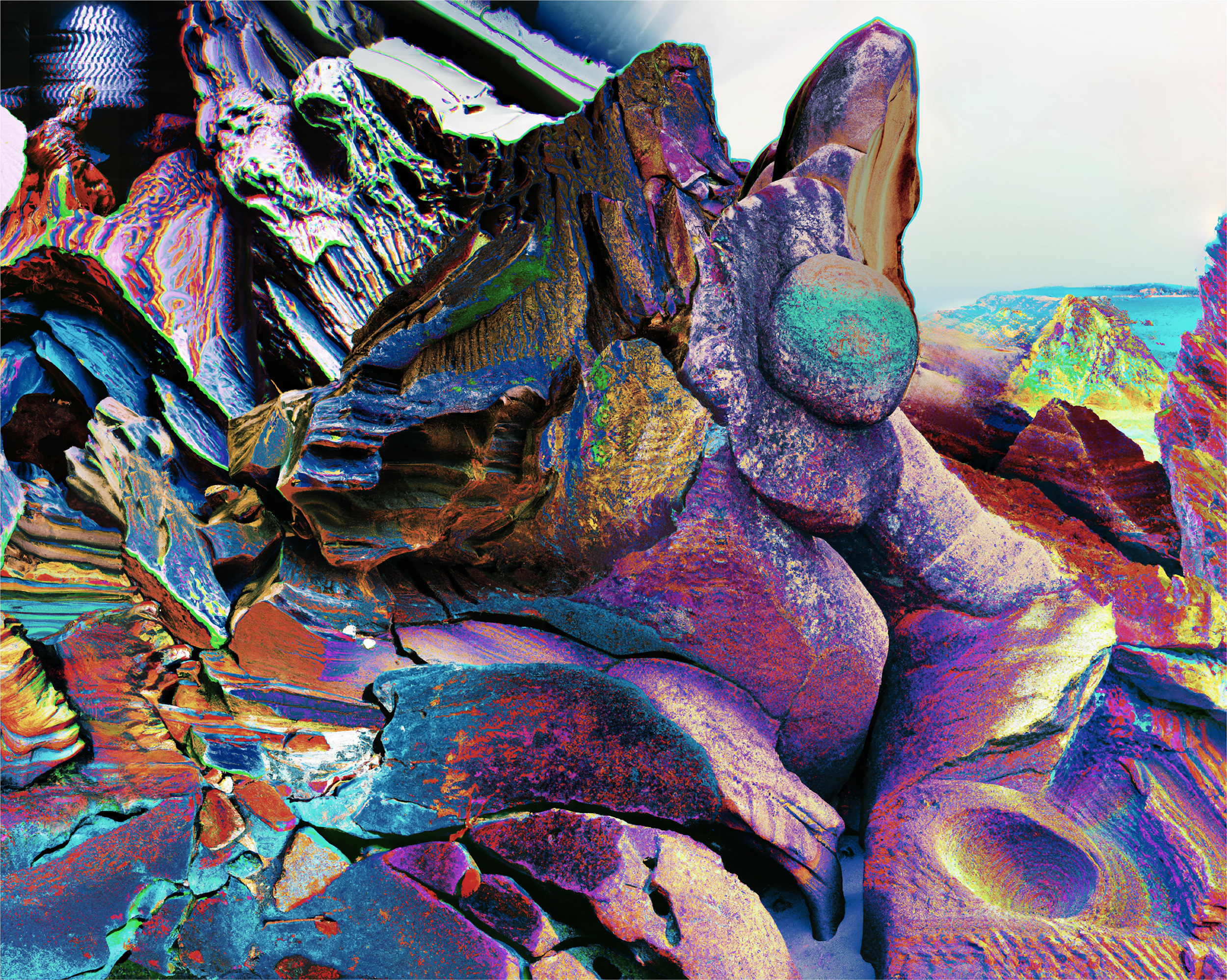
Three works, one inside the other. The first removes the figures from early Renaissance paintings to release the geology already there. The second expands those images beyond the frame of the painting, until they begin to generate themselves. The third returns inside them, isolates the fragments where the model failed, and expands those.
Perspicere 2018 — 2023
The series focuses on the representation of nature in some of history’s most iconic artworks.
Starting from frescoes by Paolo Uccello, Fra Angelico and Giotto, where rock formations and landscapes are depicted as a background for religious representations.
I digitally manipulated the works, eliminating the main subjects in the foreground and reconstructing the landscape behind them; thus making it the sole subject and redirecting the reading of the artwork towards geology.
The first time I saw the Annunciation by Leonardo da Vinci at the Uffizi, my gaze did not focus on the Angel or on the Madonna, but on the natural elements present in the painting. The perspective leads the eye unequivocally towards the mountains in the background. The trees and plants in the painting seem to be catalogued and analysed by type and form; an aspect also evident in the work Art Forms in Nature by Karl Blossfeldt.
Leonardo uses the Annunciation and many of his works as vehicles to express and deepen his studies on geology, botany, anatomy and meteorology. During the Renaissance, perspective represented a new philosophical method and approach to nature. Perspicere, from the Latin “to see through”, expresses the intention of going visually beyond the subject, encouraging a deeper reading and analysis of history and our relationship with landscape.
Subsequently to my digital manipulation, the works return to the cornerstone of my photographic practice by being re-photographed with a large format camera.
The results are small poems dedicated to the relationship between imagined and objective geology.
The series takes its cue from the previous work Perspicere, a work on the representation of geology in the early Renaissance, in which images of frescoes and paintings have been digitally manipulated by removing all the figures from the scene and reconstructing the landscape in the background to make it the subject of the image.
In this new series the same process has been done using AI software, but instead of working only within the original frame of the painting, the image has been scaled up in several expansions, step by step the style and colors have moved away from the original image, creating a surreal landscape made of multiple images that were used for training the software.
All of these images have their roots in the same visual idea of geology used as a source for the work.
This process represents for me the increase in complexity of the way in which geology is represented and the new artificial intelligence technologies are able to represent these large amounts of data, which are the fulcrum of our contemporaneity.
The following works have been generated from iPhone pictures of Fra Angelico’s frescoes in the friary of San Marco in Florence that have geological features.
Small fragments of the images generated in Expanded Perspicere, those where the model failed, are isolated and expanded again — this time following a single instruction: to make a rock formation as if it were an abstract painting. The error becomes the starting material, and abstraction is not an outcome but a request.