The work begins from a cartographic axis: the Geological Exploration of the Fortieth Parallel, led by Clarence King with photographer Timothy H. O’Sullivan, across the American West between 1867 and 1872.
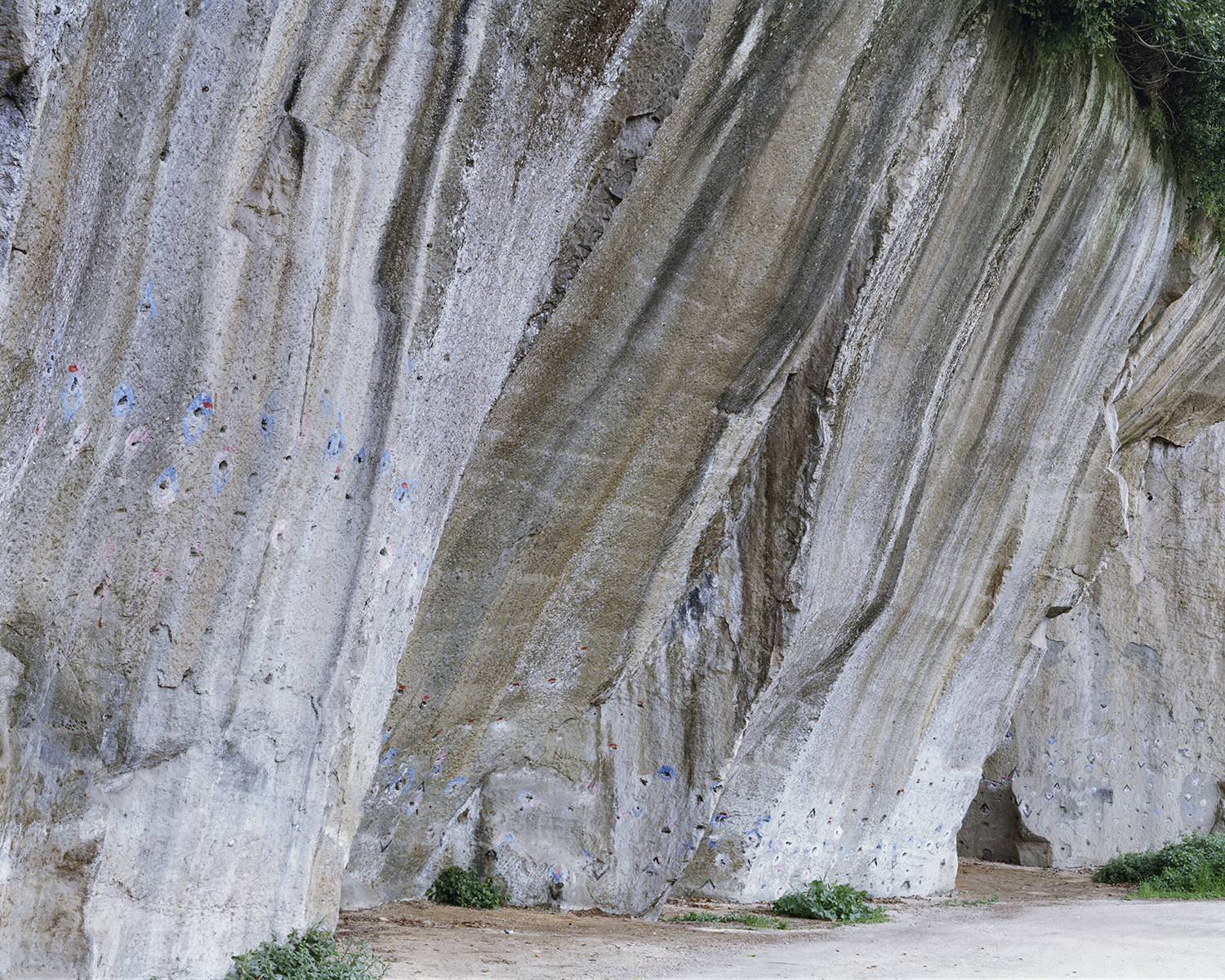
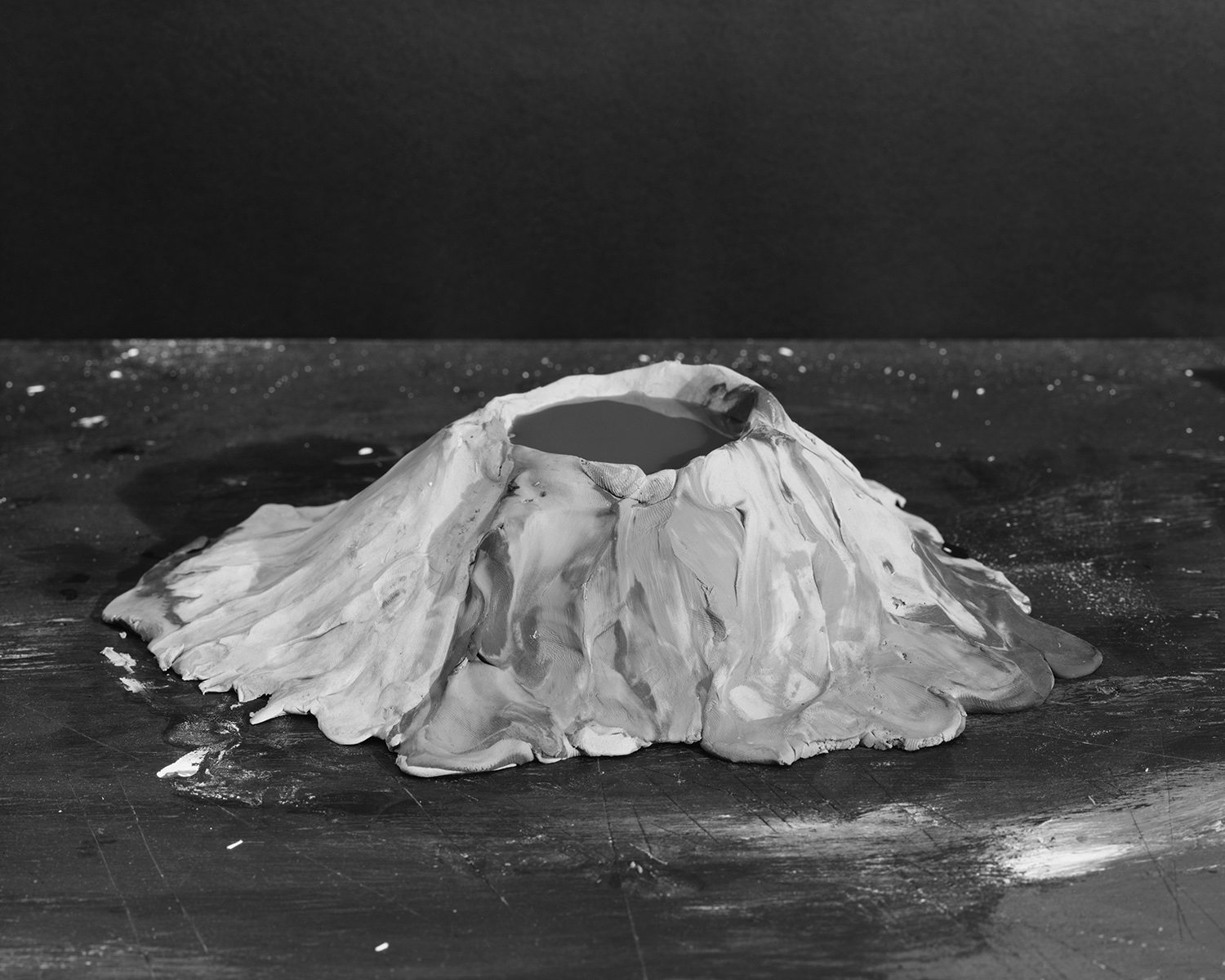
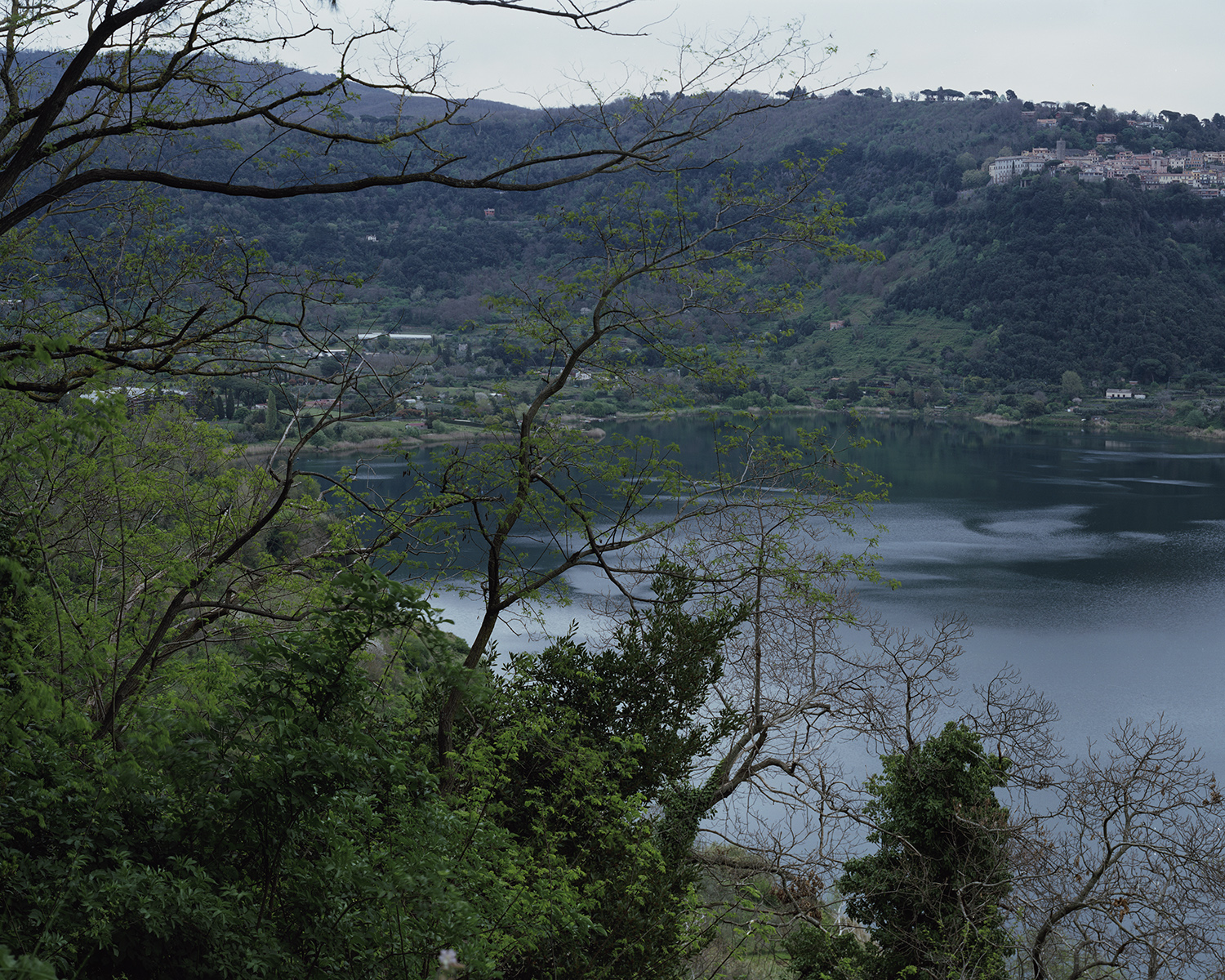
Transposed to Italy, the parallel shifts north and meets a geology that takes the form of cult. Its point of arrival is the Vulcano Laziale, the volcanic apparatus of the Colli Albani, a quiescent caldera twenty kilometres from Rome. Here the structure of the mountain coincides with that of myth: a volcanic cone whose explosive activity hurled stones read as celestial signs, and the crater lake of Nemi, for centuries the site of the sacred wood of Latium.
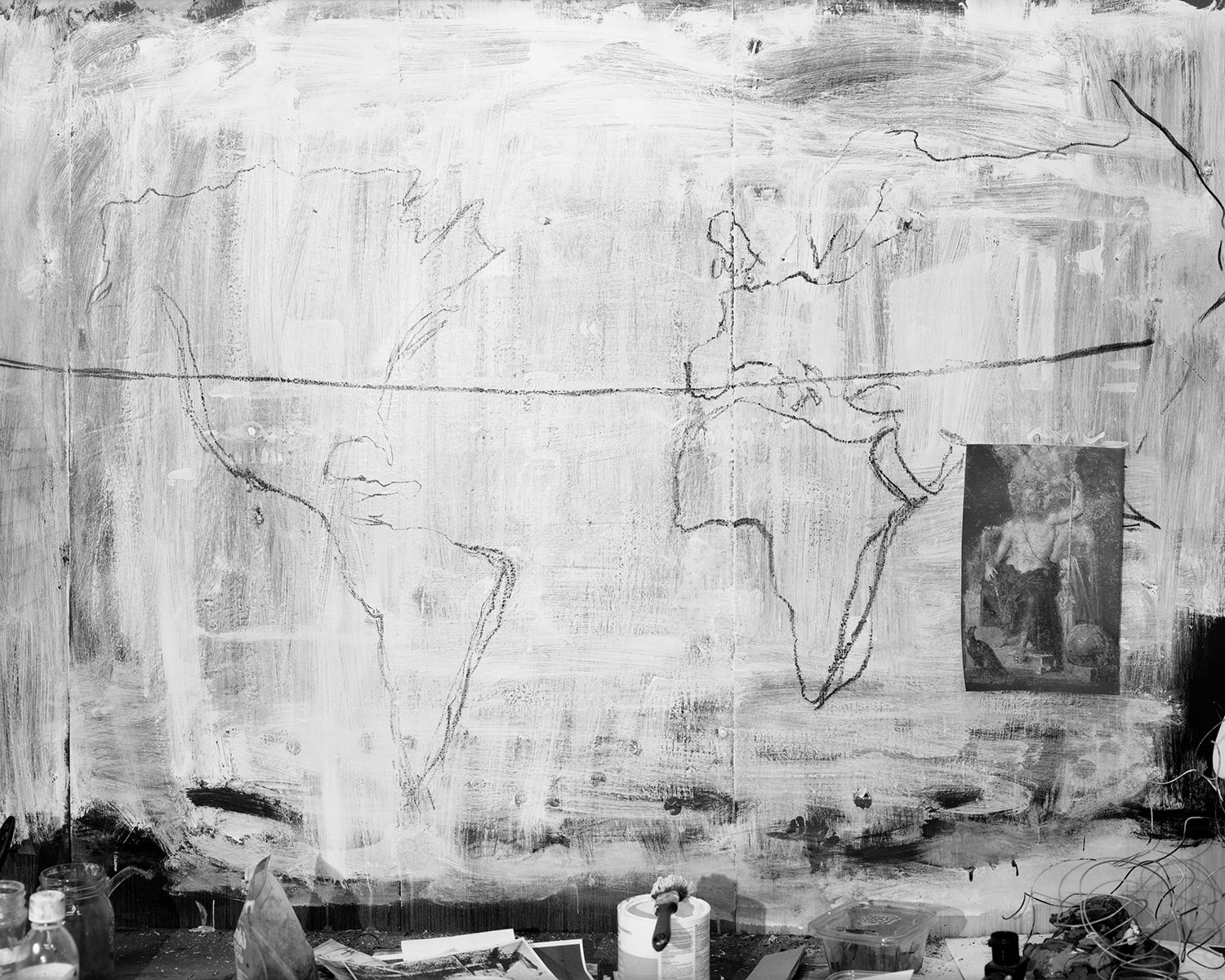
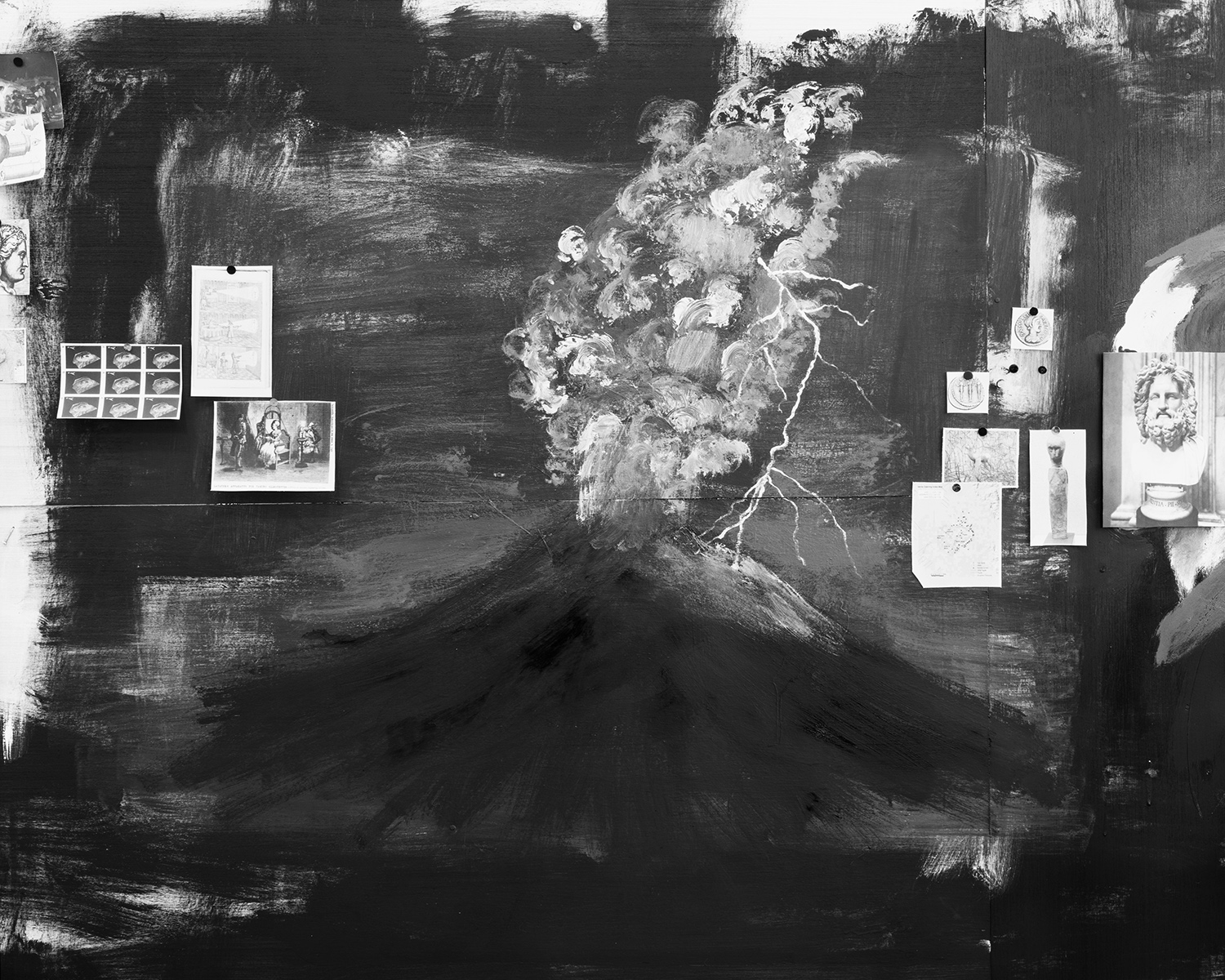
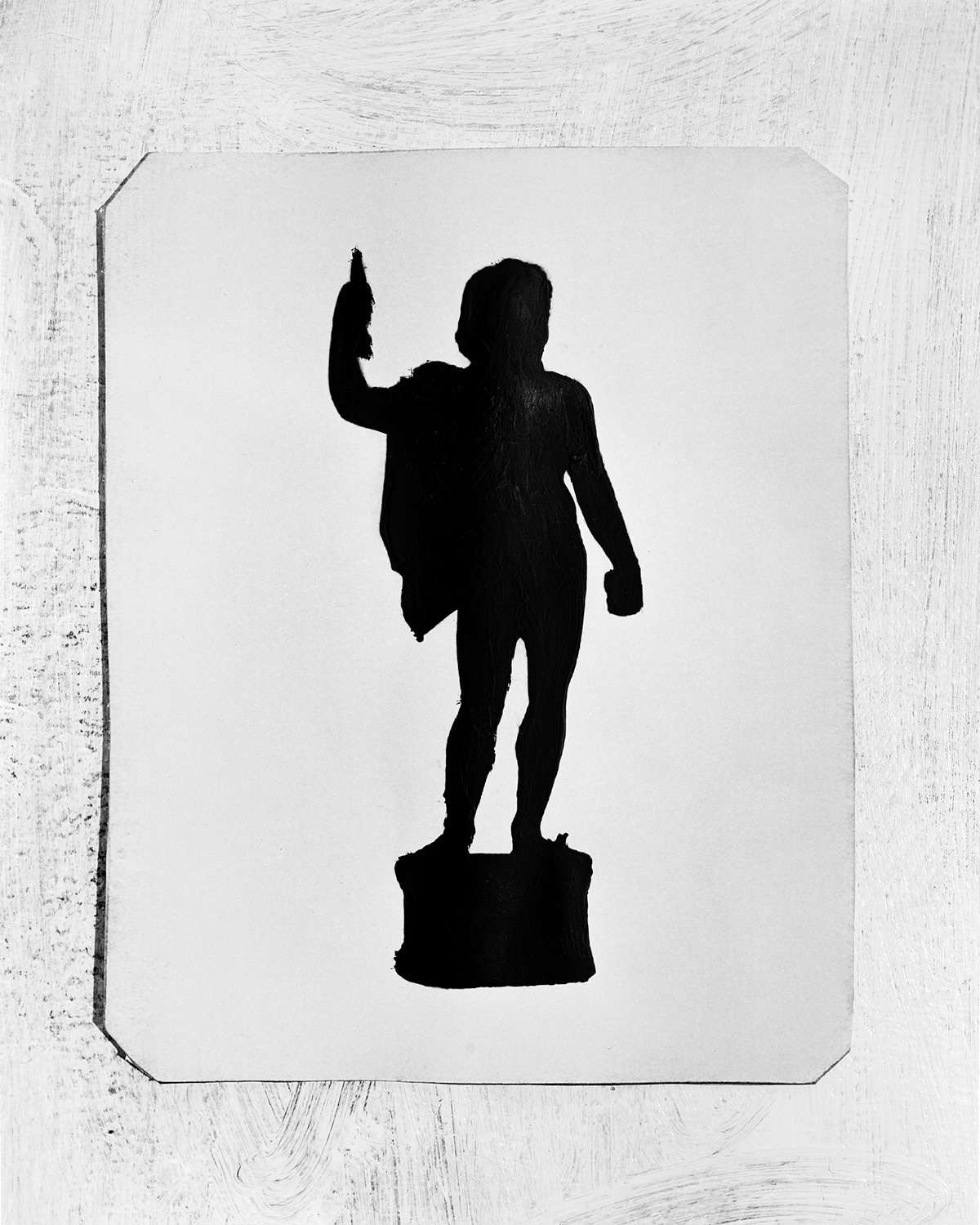
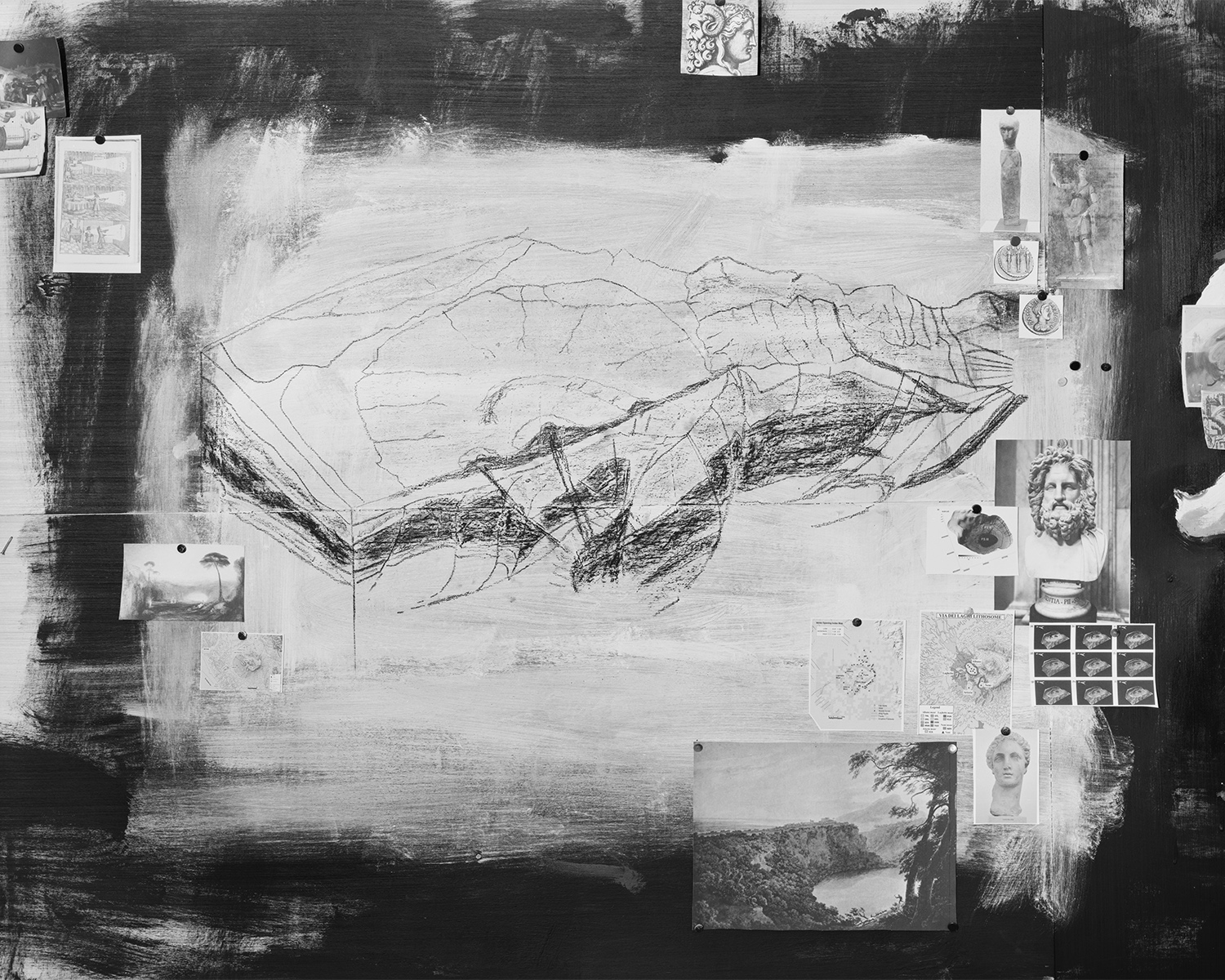
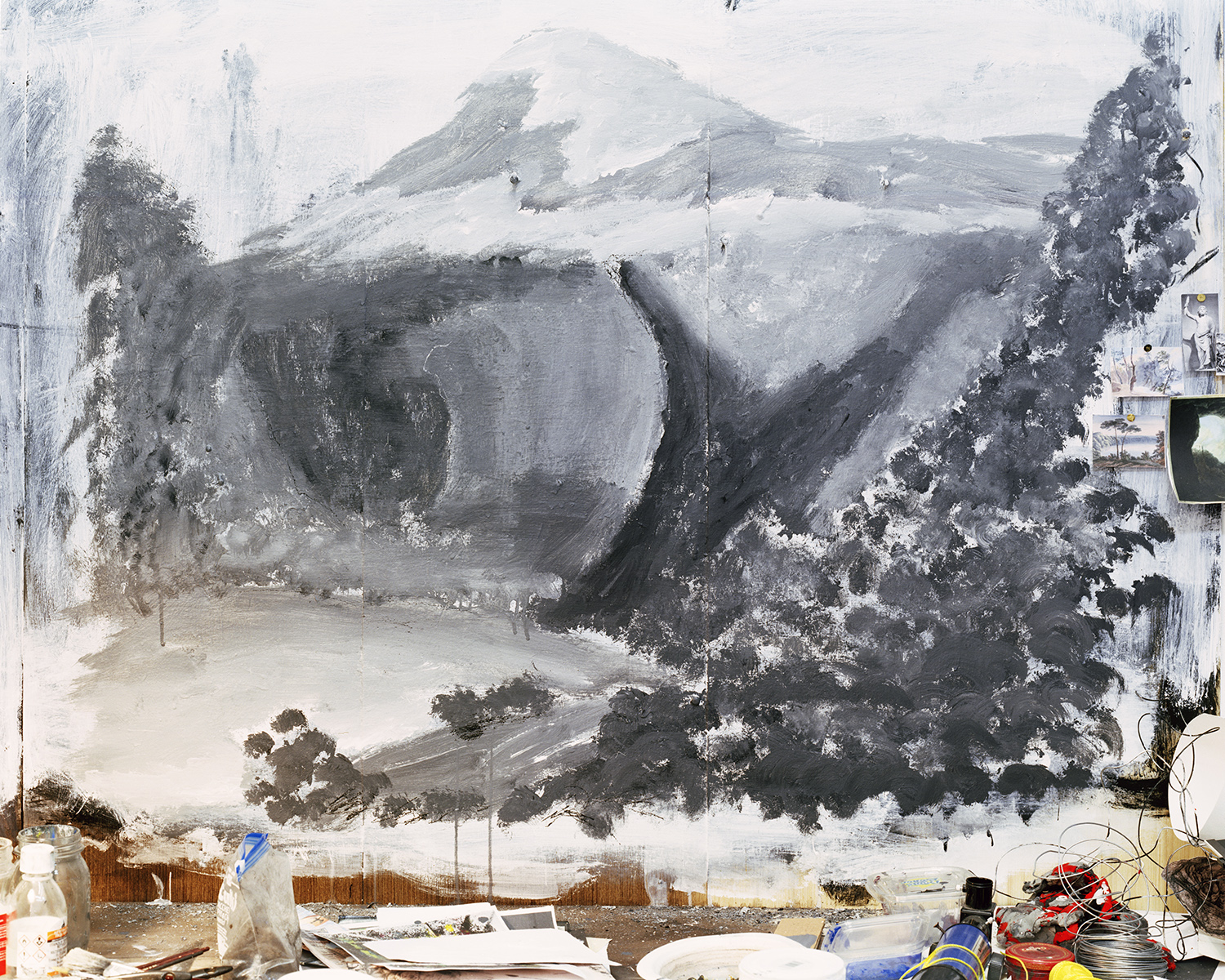
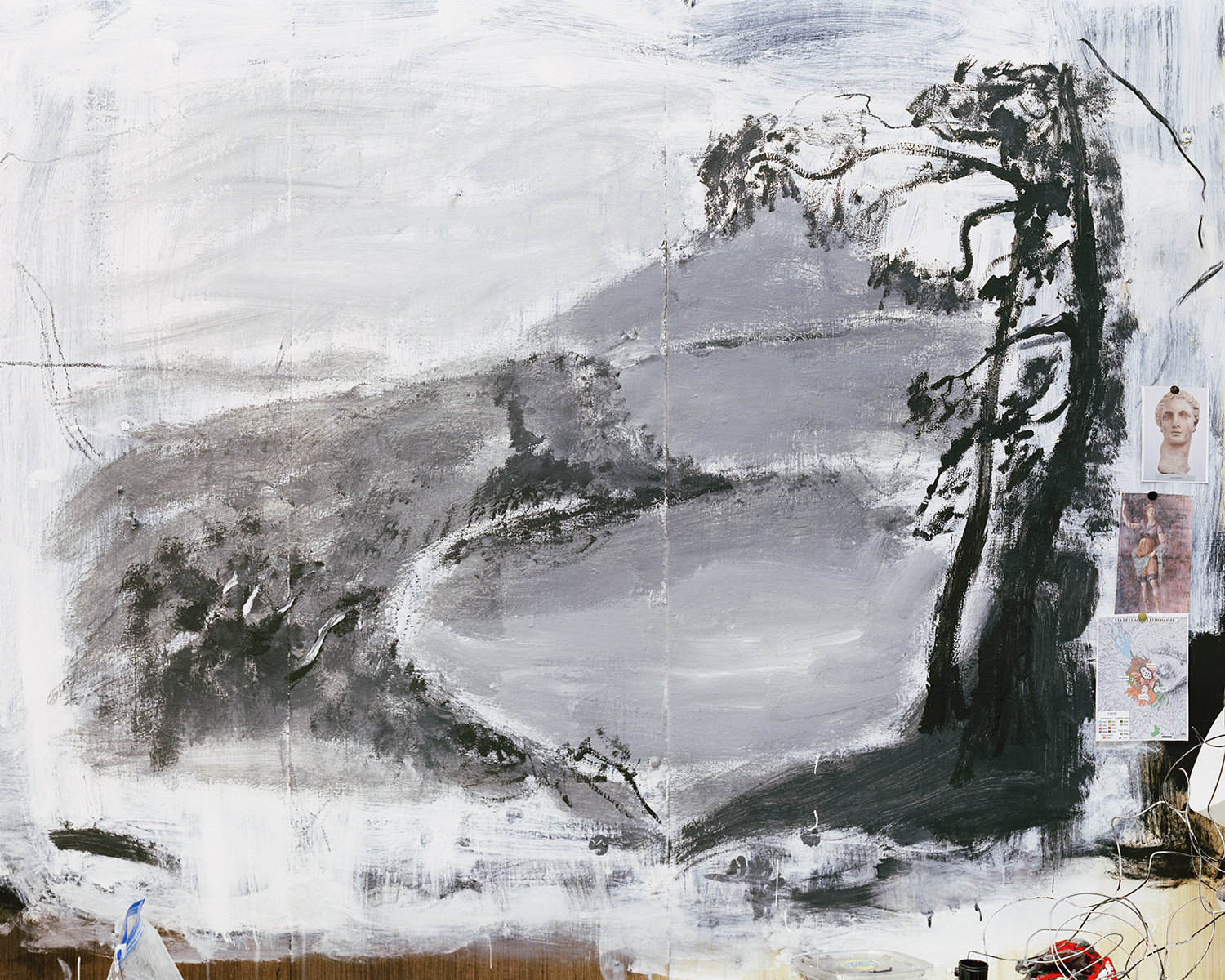
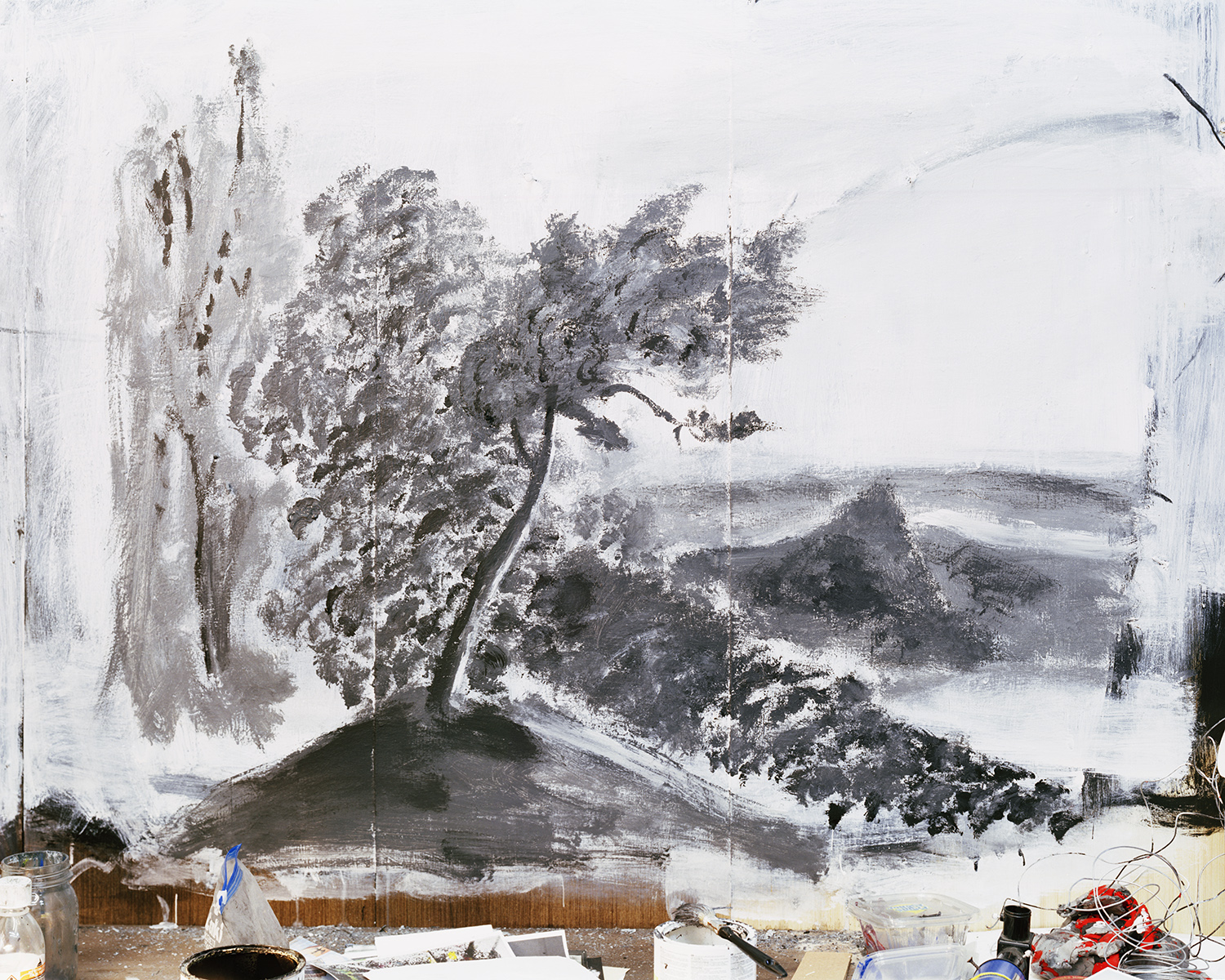
The work moves on two planes. In the field, the photography crosses the caldera drawing on the method of the first explorers — almost a homage owed. Its centre shifts to the studio, where heterogeneous materials are transferred or painted onto the walls: geological diagrams, ancient iconography, reproductions of Grand Tour paintings. The Tables come from this second plane, a space where geology and mythology settle with no hierarchy between scientific datum and sacred image. Diagram and prodigy share the same visual field.
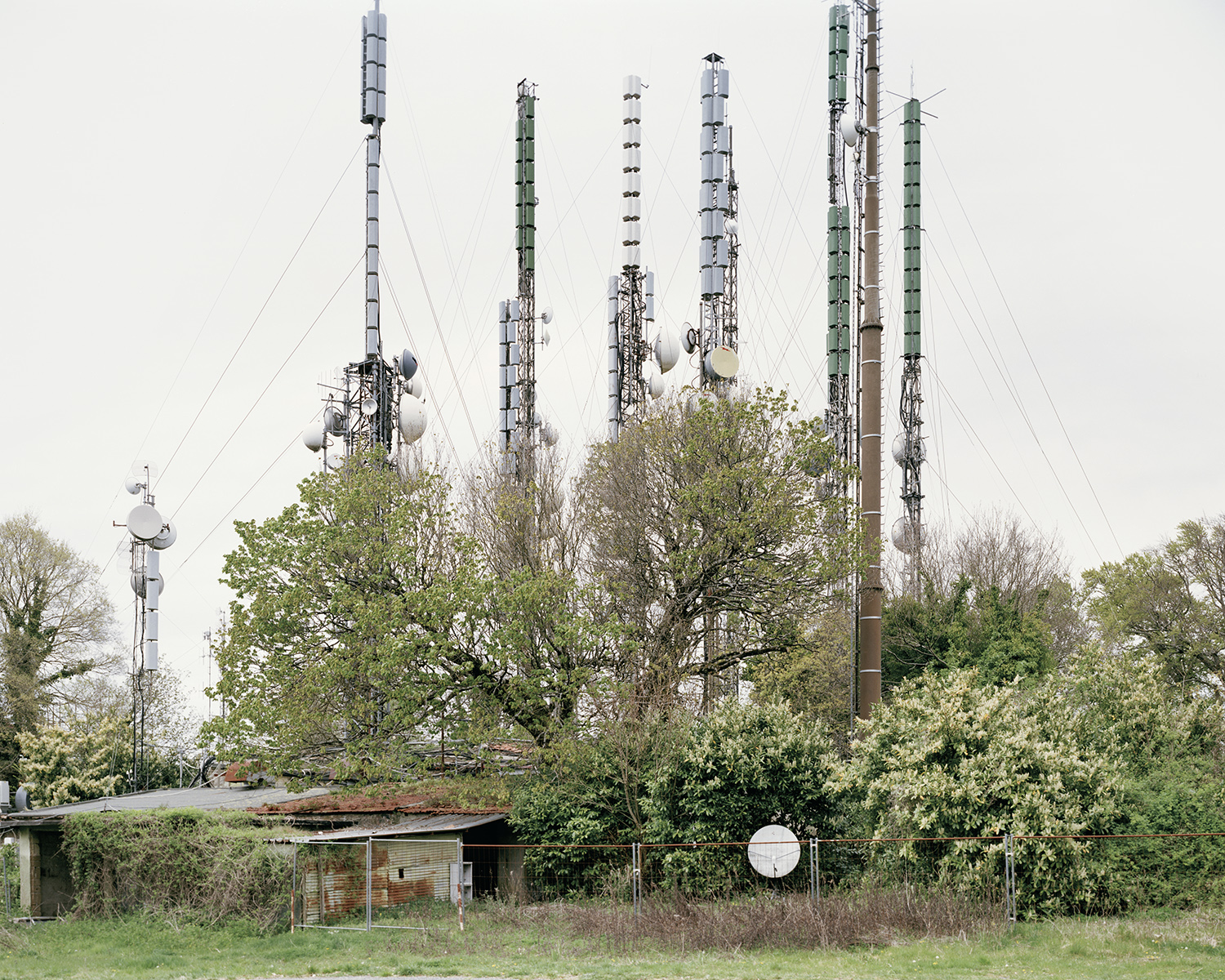
On the summit stood the temple of Iuppiter Latiaris, its position translating the mountain’s activity into religious form. Livy recorded a rain of lapilli on Monte Cavo as a prodigy and fixed its ritual answer, the novendiale sacrum, to be repeated each time the mountain spoke. The god of lightning and the volcano share one grammar.
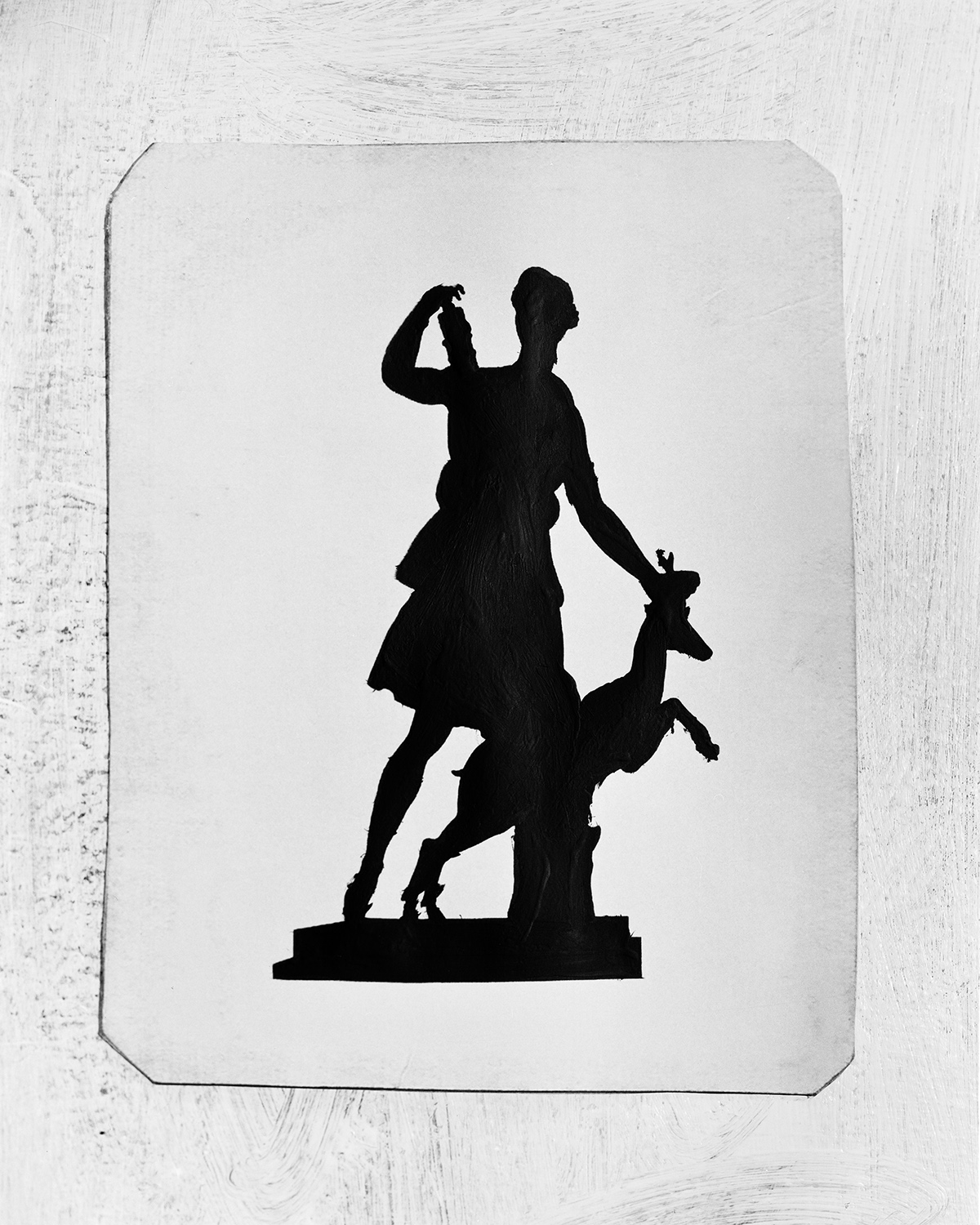
On the slopes, in the crater of Nemi, lay the sacred wood of Diana Nemorensis, who owes her name to the wood, nemus. Here the cult rises from wood and water: the crater basin filled to become the speculum Dianae, the wood that rings it. One geology generates two orientations, one toward the sky, one toward the earth.
From here the work follows two lines that cross: one along the summit, one descending into the wood of the crater. Two readings of the same volcanic structure — a territory already populated by images, where geology, myth, iconography and observation are different ways of looking at one place.